Ode to Dubrovnik – “Art is a journey for those bold enough to go first.”
This time, our path takes us to Dubrovnik — the city of freedom, heroes, and handwritten legacy. The limited-edition “Ode to Dubrovnik” is a tribute to the great figures who shaped its history, the architecture that protected it, and the documents that defined it.
Originally conceived as a collection of bespoke wallpapers for the luxury Dubrovnik hotel Sumratin, it evolved into a homage to a heritage that continues to inspire today. Each wallpaper tells a story through a three-part composition — a hero, an architectural motif, and a historical record — interwoven in watercolor layers and finished in a way that preserves the authenticity of each brushstroke.
“Ode to Dubrovnik” is more than wallpaper. It’s an imprint of history, art, and freedom — transformed into a design that brings spaces to life.
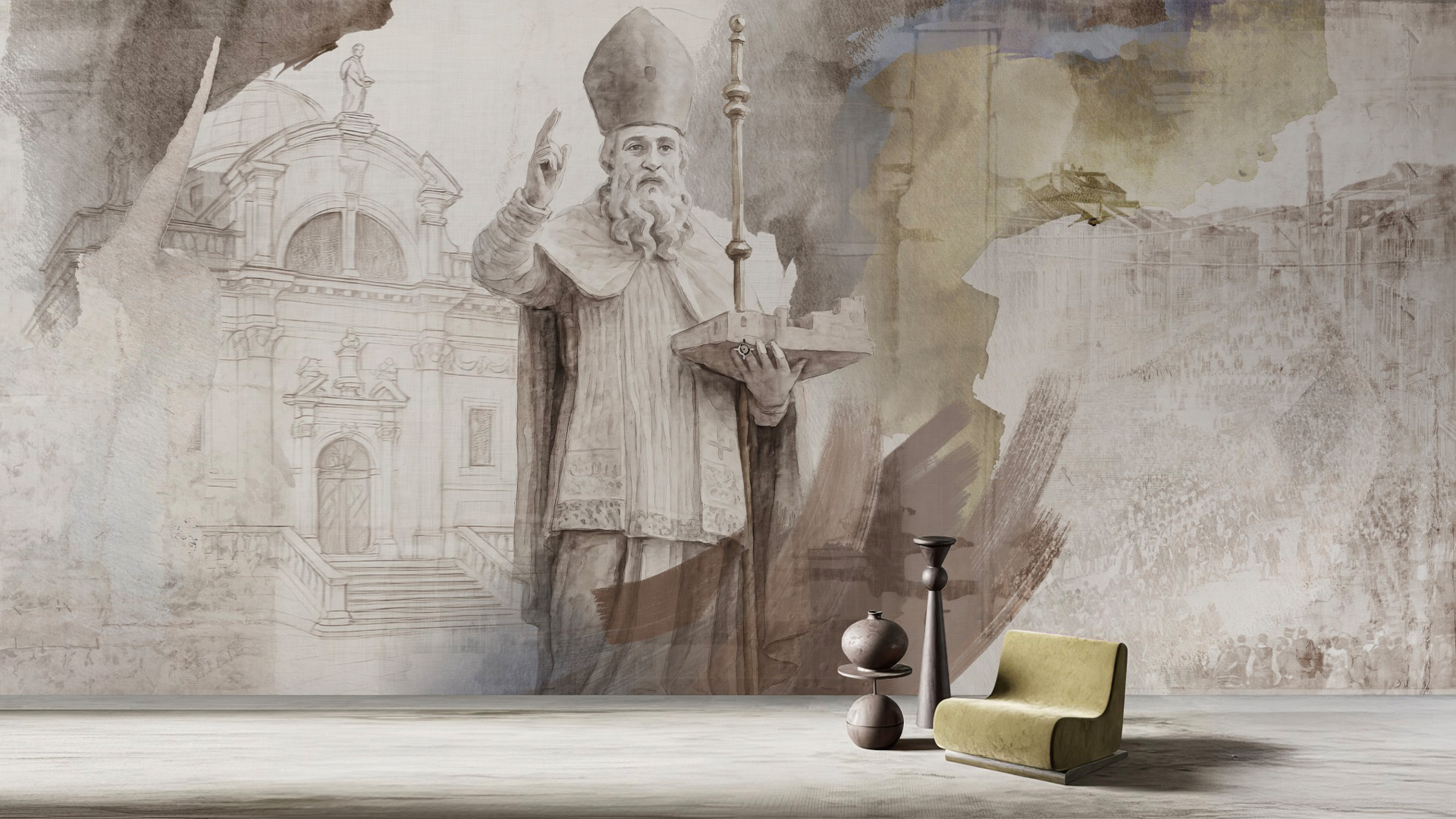
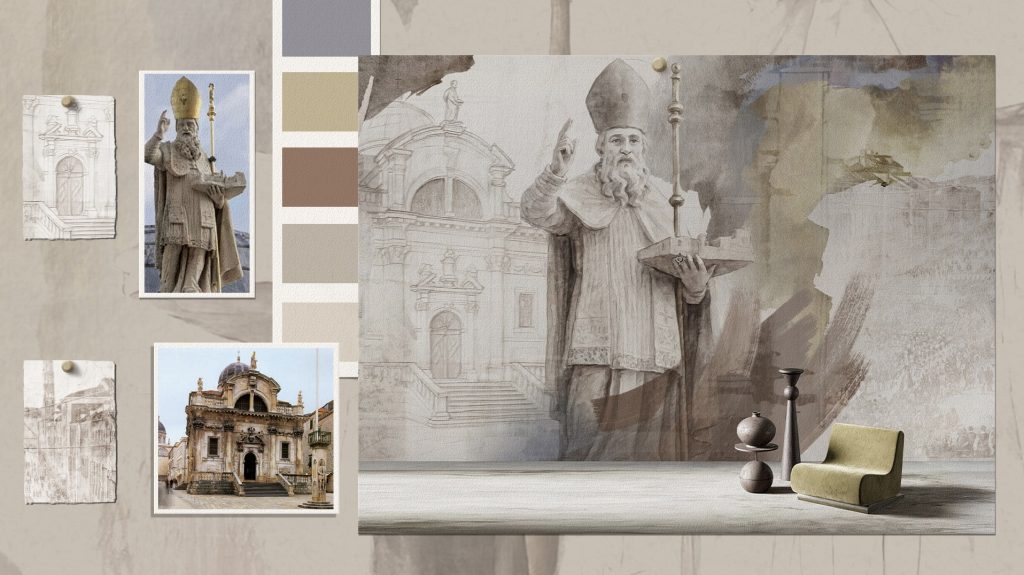
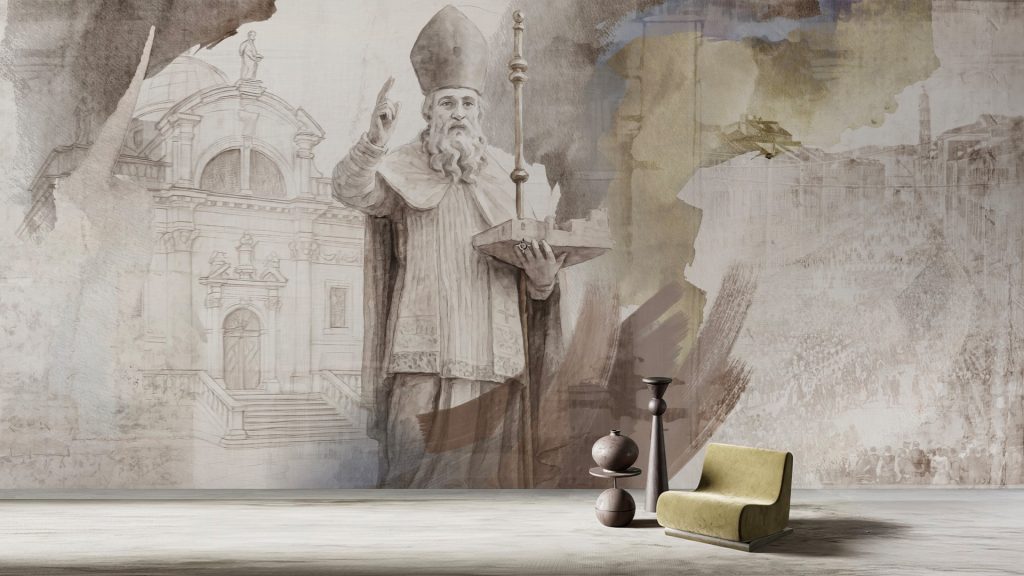
Patronus
The Saint Blaise’s Festa – the only celebration that has been held continuously since the year 972.
For the people of Dubrovnik, it’s simply Festa.
For UNESCO, it’s intangible cultural heritage.
For the banner bearers – the ultimate bicep workout.Legend has it that Saint Blaise saved the City from the Venetians; the fact is, he still holds it together to this day.
That’s why the Baroque beauty, the Church of St. Blaise, served as the perfect backdrop and was transformed into a wallpaper motif that tells the story of centuries-old tradition and rich architecture.
Commercium
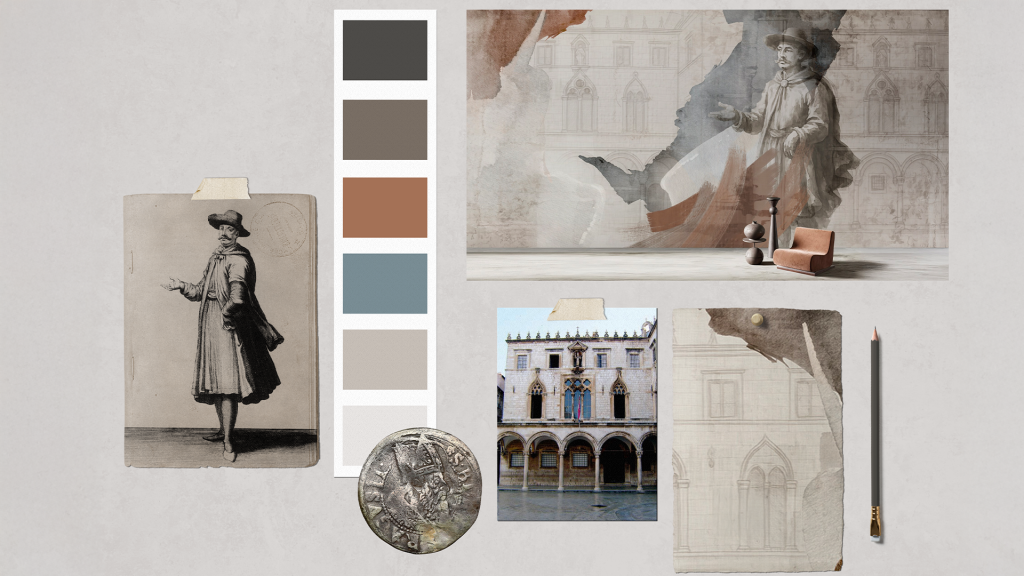
The economy of the Dubrovnik Republic in all its glory.
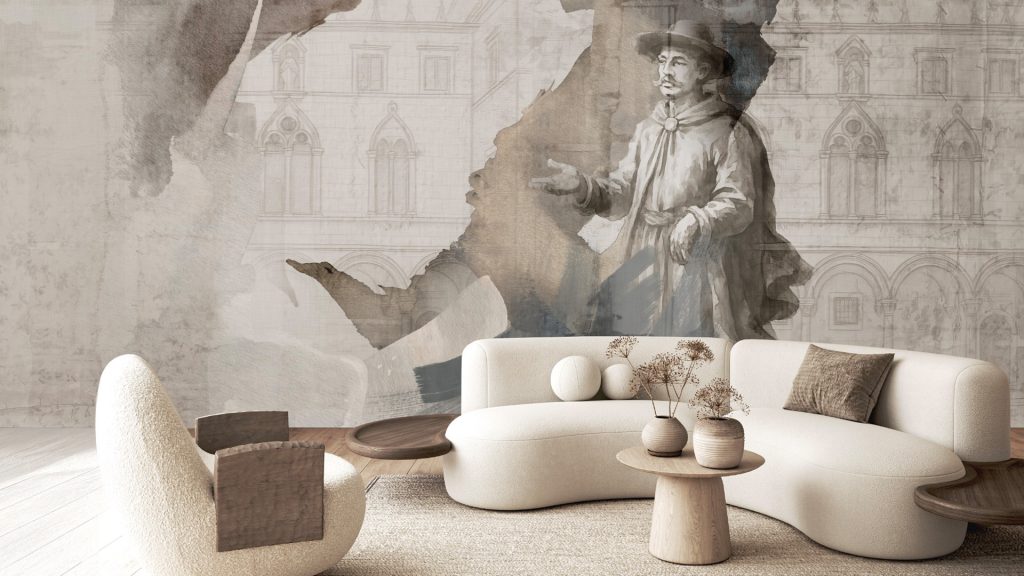
The Sponza Palace, one of the finest examples of Gothic-Renaissance architecture, even withstood the great earthquake of 1667. It served as a customs house, mint, goldsmiths’ workshop – in short, a true medieval business hub. In its atrium still stands a Latin inscription, now part of the wallpaper design, which reads:
“Our scales do not permit cheating or being cheated. When I weigh goods, God weighs me.”
In other words: fair trade long before it was a trend. The wallpaper features motifs of Dubrovnik currency, the Sponza Palace, and a merchant – because the economy was the lifeblood of the Republic, and honesty its fundamental measure. The result is a wall that reminds us Dubrovnik always understood: without trust, there is no trade.
Ars Curae
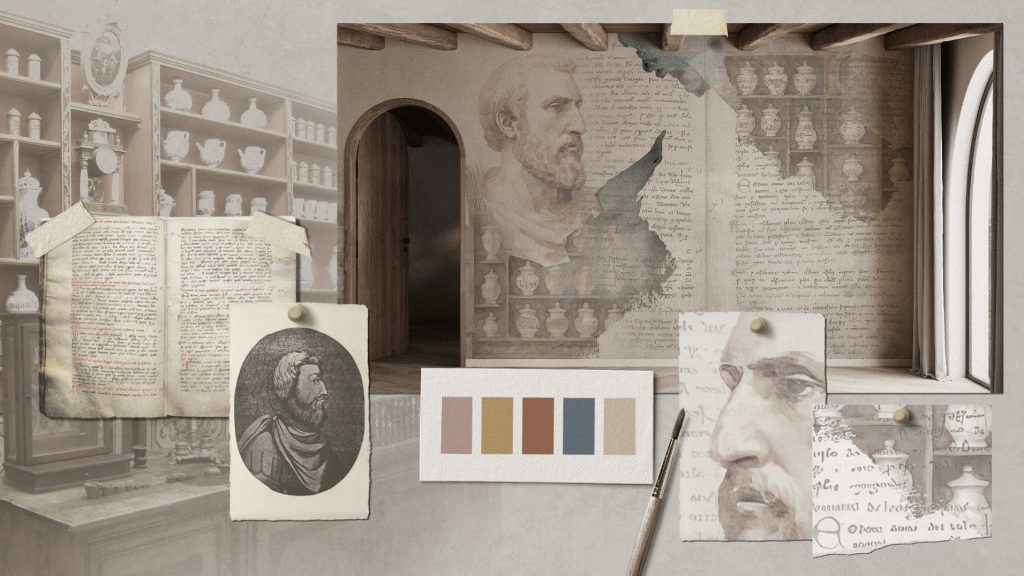
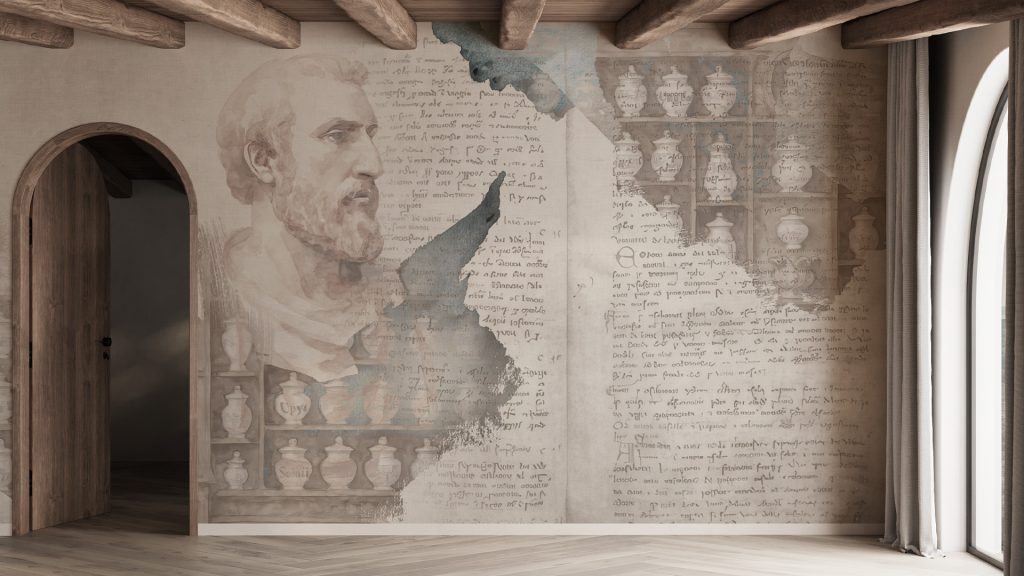
The central motif of this wallpaper takes us to one of the oldest pharmacies in Europe – the Franciscan pharmacy of the Friars Minor, founded all the way back in 1317.
Yes, Dubrovnik had a functioning pharmacy while much of the world still believed that a bit of incense and a lot of luck were the best medicine. Alongside an archival depiction of its interior, the wallpaper also features the historic decree on quarantine, and a portrait of the renowned physician Amatus Lusitanus, who practiced in Dubrovnik for a time.
There’s also a reminder that the Dubrovnik Republic was the first in the world to introduce quarantine – in 1377 – long before Zoom meetings became a thing. This wallpaper, then, carries the scent of history, heals the walls, and delivers a dose of Renaissance spirit.
Aqua
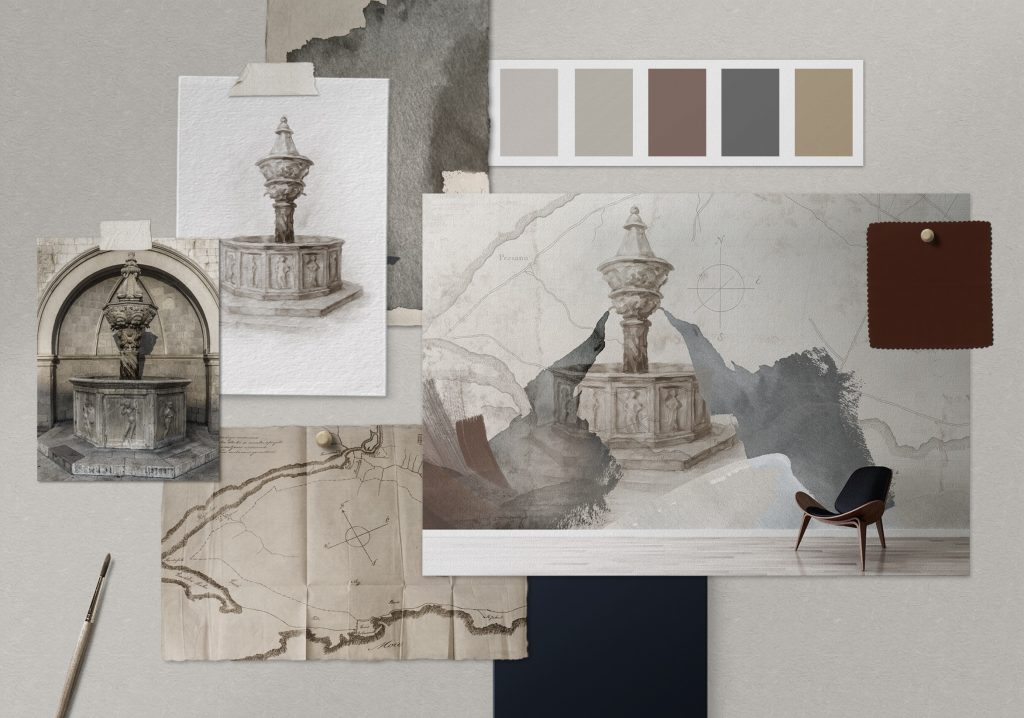
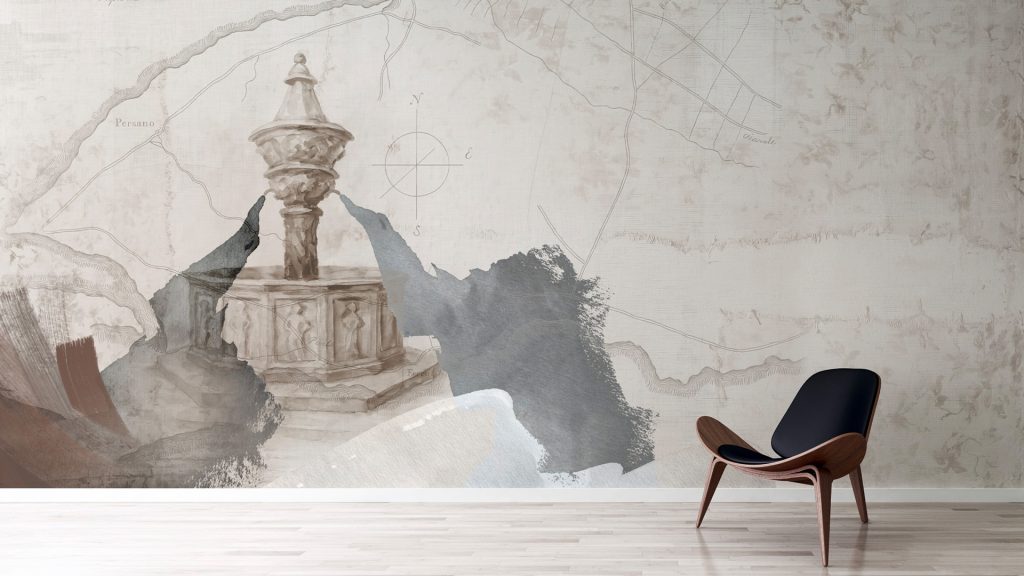
The star of this wallpaper is the Dubrovnik aqueduct – the construction project of the century… back in the 15th century.
In 1436, the Great Council declared: “We need water!” And just 11,700 meters later, with a precise 0.6% incline (because Dubrovnik has always appreciated accuracy), the aqueduct was completed in only 14 months.
Yes, even then, deadlines were faster than today. To build it, they brought in Italian experts Onofrio de la Cava and Andreucio de Tramonete de Bulbita – the ultimate hydrotechnical dream team of the era. The wallpaper brings to life motifs of the Small Onofrio Fountain, the Ombla spring, a map of the route, and the source itself – a blend of historical engineering and wall-worthy aesthetics. The result? A wall that doesn’t just flow with history, but reminds us that even in the 15th century, Dubrovnik knew how to build serious infrastructure.
Aristocratia
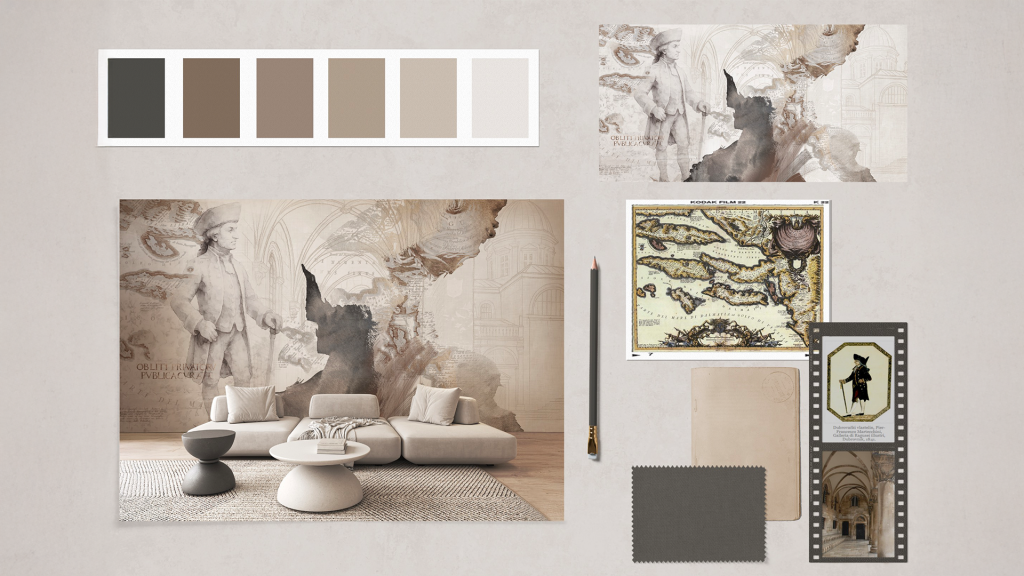
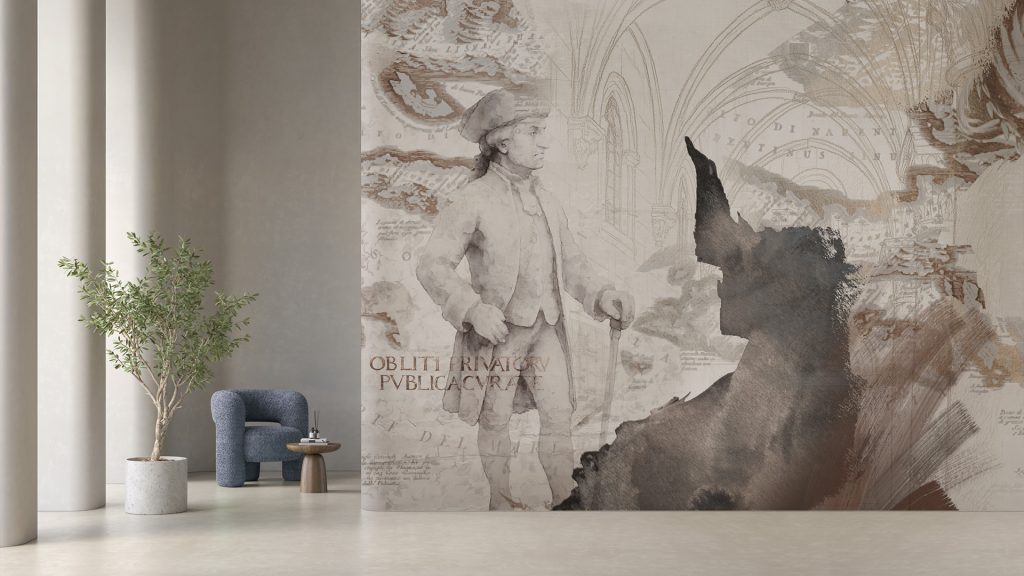
The government of the Dubrovnik Republic was aristocratic, feudal, and strictly organized.
The Great Council gathered all male members of patrician families, alongside the Small Council and the Senate – an exclusive “members-only club” for nobles. The Rector, on the other hand, had a term shorter than today’s Netflix free trial – just one month.
He lived in the Rector’s Palace, which served as his office, residence, and even a prison (talk about work-life balance).
At the entrance, a clear message: “Forget the private, care for the public.” The wallpaper features motifs of the Rector’s Palace, maps of the Republic, and the famous inscription – because the Republic understood: leave your ego at home, the City comes first.
Misericordia
The face of humanity in the Dubrovnik Republic.
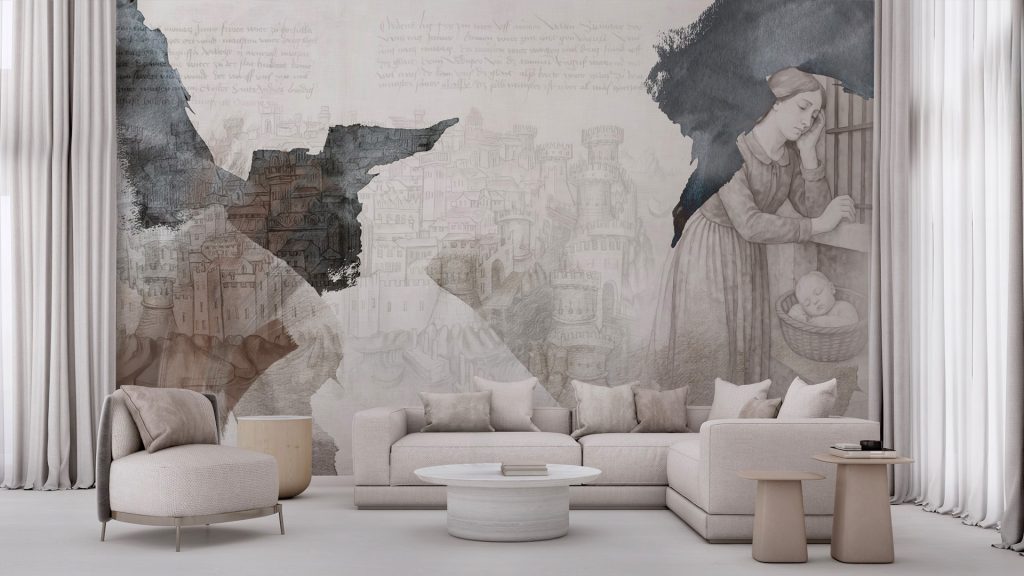
As early as 1416, they abolished slavery—four centuries before America! The City redeemed captives and took special care of the poorest citizens. Very early on, they established the nahodište, the Ospitale della misericordia, where newborns could be left anonymously and safely. It worked brilliantly simply: a child was placed in a rotating wheel, spun inside, a bell rung, and the care system was set in motion. Children were cared for until the age of six, after which they were placed for adoption. The wallpaper features the now-bricked-up door of the nahodište, with an inscription from the Psalms:
“My heart is warm within me, and a fire is kindled at my thoughts,”
alongside a touching yet honest scene of a woman leaving her child. This wall speaks not only of power and trade but also of empathy and the Republic’s pioneering social care system.
Musica
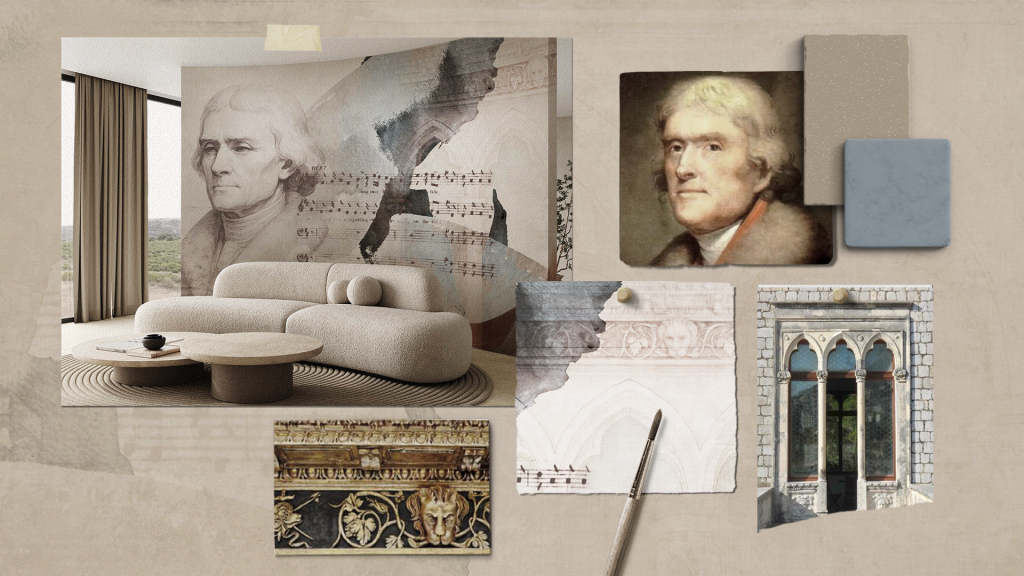
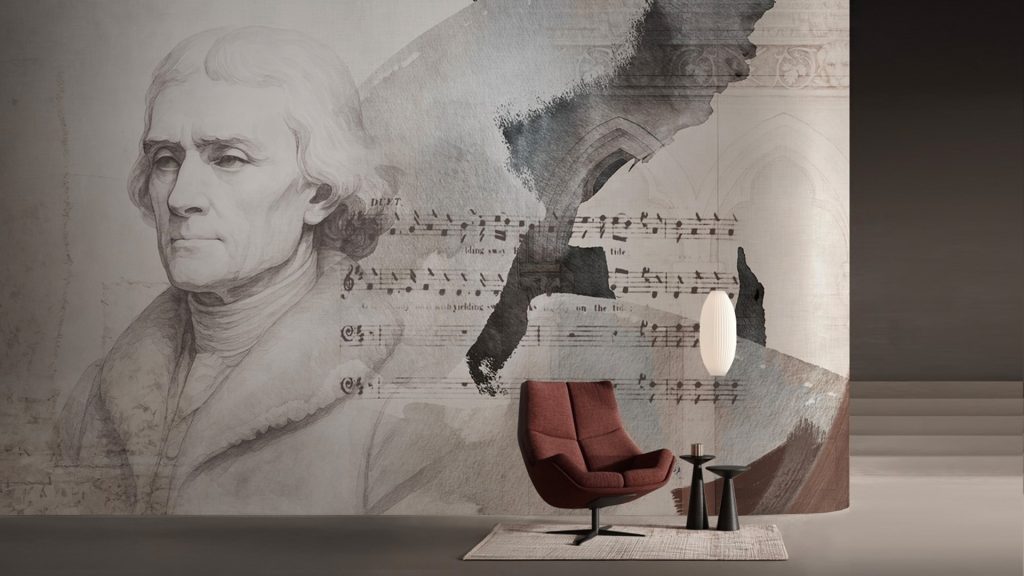
The main hero of the Musica wallpaper is Luka Sorkočević – Dubrovnik’s Baroque composer and the first Croatian to ever write a symphony.
A true musical jet-setter of his time, he mingled with Europe’s elite, and let’s be honest – today he’d have a platinum-level Spotify profile. In the background, you’ll spot his summer residence in Lapad, architectural details, and the ornate ceilings of the palace where he lived (and, admittedly, met a dramatic end) – now known as the Bishop’s Palace. In short: history, music, and a touch of Baroque glamour – all wrapped into a wallpaper that plays on your walls.
Philosophia
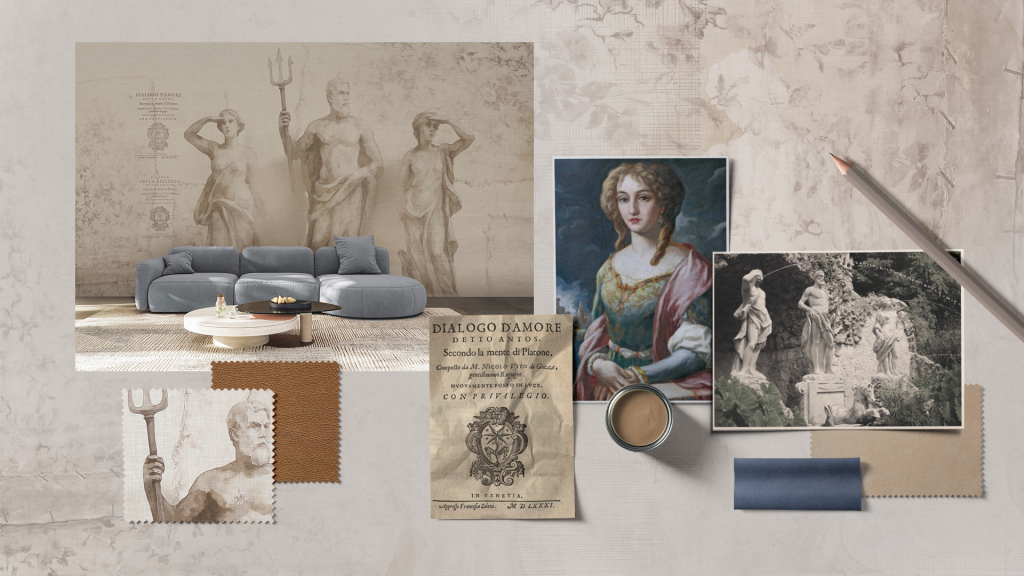
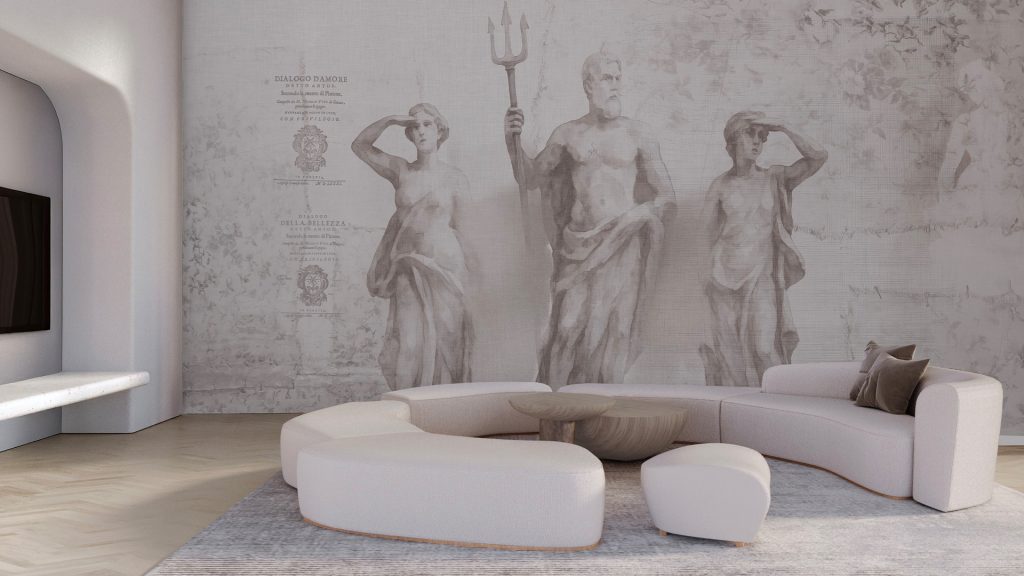
The main motif of this wallpaper is the fishpond adorned with sculptures from the Trsteno Arboretum – the perfect backdrop for an intellectual chill & chat between two Renaissance ladies. On one side, Cvijeta Zuzorić – Dubrovnik’s very own icon of beauty (if Vogue had existed back then, she’d have graced the cover every month).
On the other, her friend Maruša Gučetić – the first Croatian female philosopher, a woman who proved that life could be debated with just as much passion as fashion. Maruša’s husband played the role of “ghostwriter,” capturing their conversations in Dialogo della Bellezza and Dialogo d’Amore – works now considered milestones of Croatian aesthetic thought. In short: philosophy, beauty, and Renaissance girl power in all its glory.
Scientia
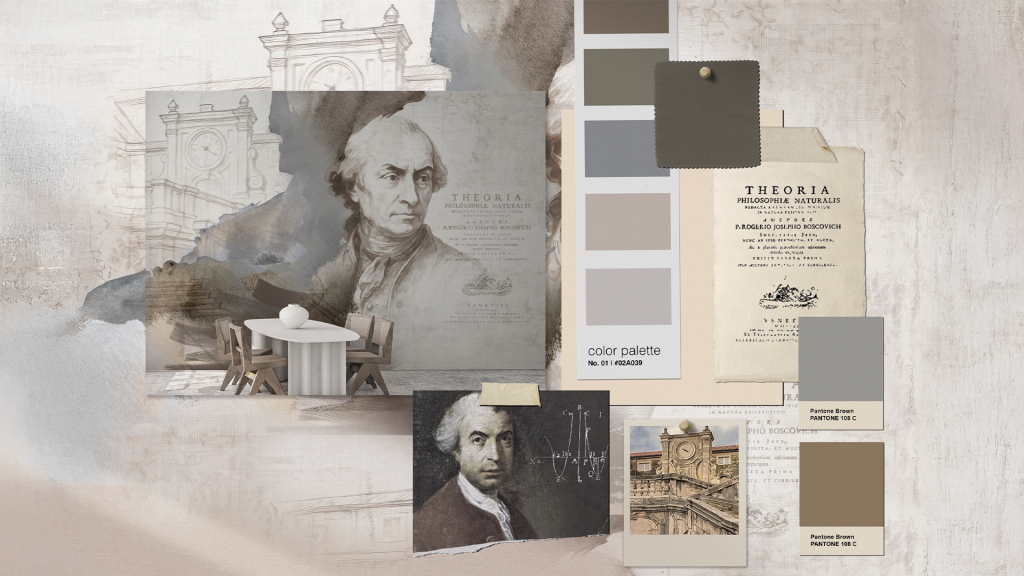
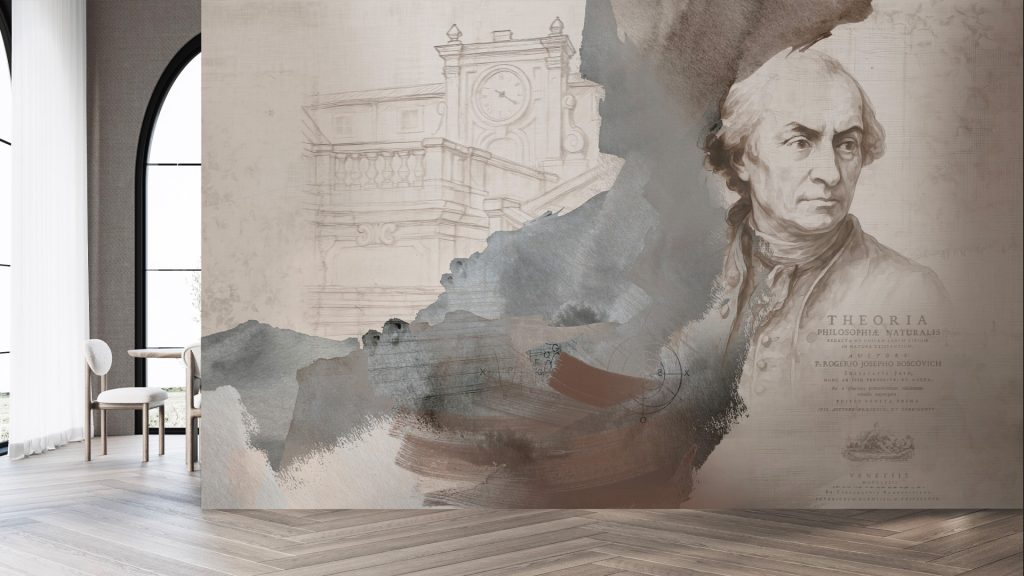
Ruđer Bošković – Jesuit, scientist, philosopher, and a man once called “the greatest intellectual of all time.”
He began his journey in Dubrovnik at the Collegium Ragusinum, a Jesuit school where he collected knowledge instead of game points, before heading to Rome and becoming a true star of the scientific world. On the wallpaper, you’ll find the cover of his most famous work, The Theory of Natural Philosophy, along with the curves still known today as – Bošković’s force curves. In short: a wall that blends science, philosophy, and a touch of Baroque charm.
If you’re looking for a wallpaper that’s both smart and beautiful – you’ve just found it.
Poetica
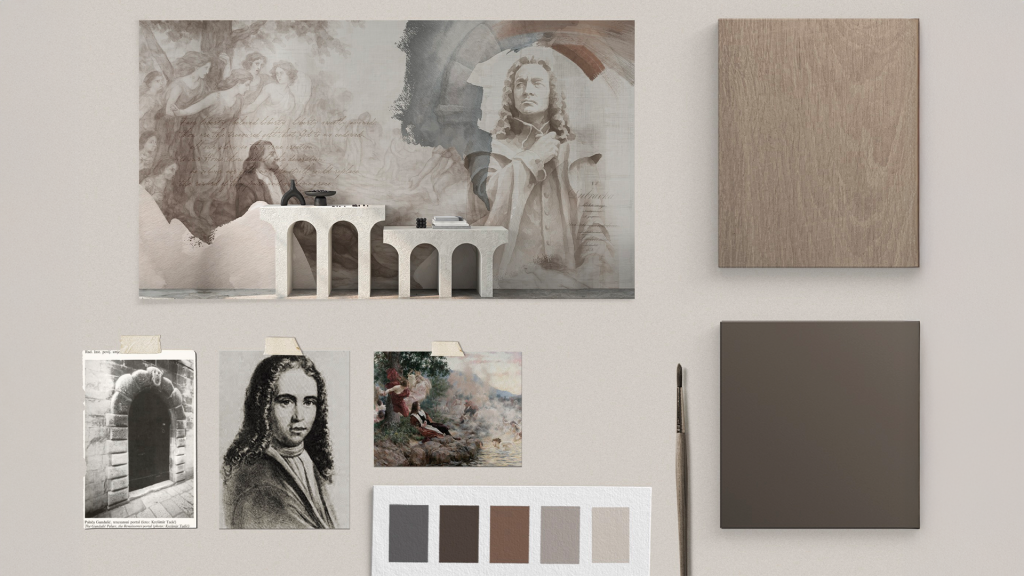
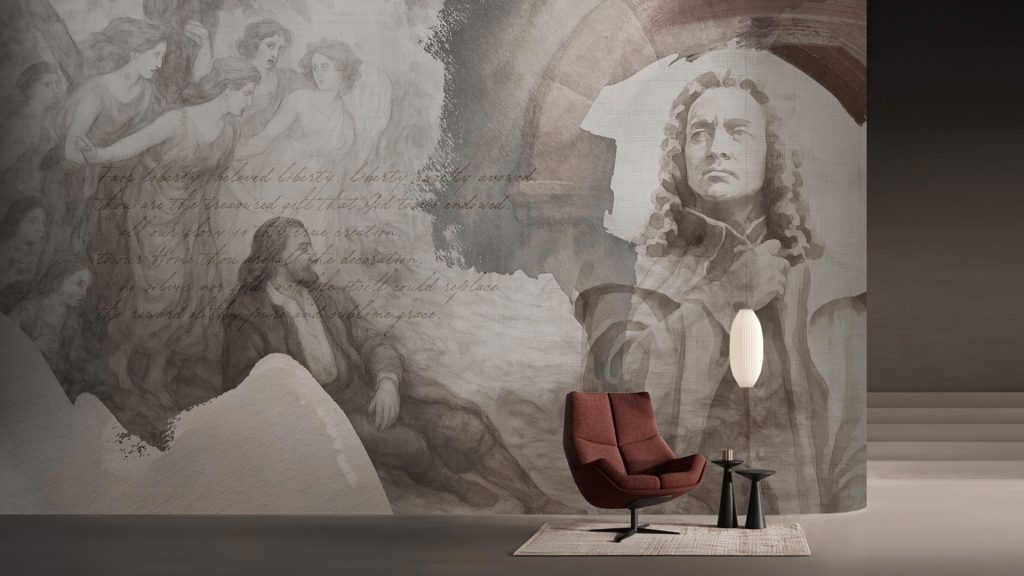
Ivan Gundulić – the greatest epic poet of the Croatian Baroque and the man who gave Dubrovnik its most famous hymn to freedom.
His verses from Dubravka have become a symbol of the City, proof that words can sometimes be stronger than stone walls. Hidden within the motifs of the wallpaper are: the opening stanza in English (so even tourists can understand the call of freedom), a detail of a palace that no longer exists—demolished to make way for the Orthodox church—the cover of Dubravka, Bukovac’s Gundulić’s Dream, and of course, the poet’s portrait.
Poetica is a wall that recites, dreams, and remembers – Oh beautiful, oh precious, oh sweet Liberty…
You can check out the full collection here: Ode to Dubrovnik